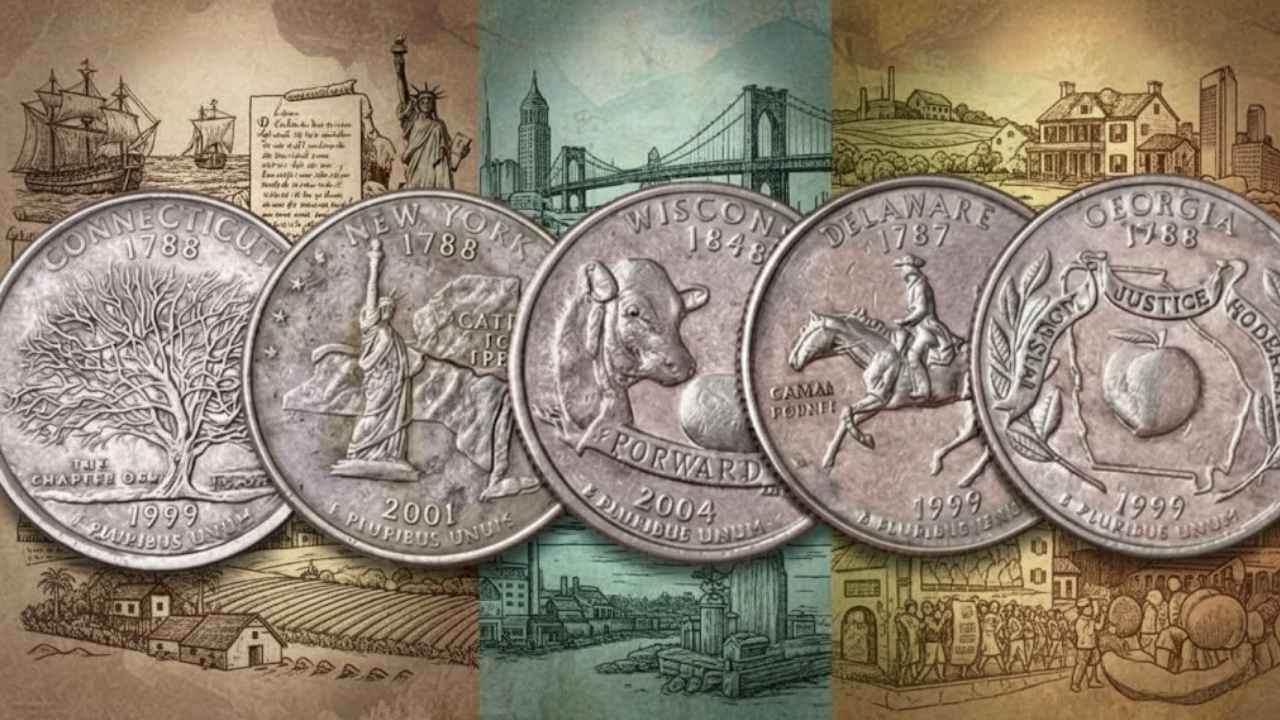
Washington Quarters Washington quarters were first introduced in 1932 to commemorate George Washington’s bicentennial. Designed by John Flanagan, the coin quickly became a staple in American currency. While millions were produced, a select few stand out due to minting errors, limited production runs, or unique historical circumstances. These rare pieces are more than currency they are miniature artifacts of history that continue to fascinate collectors.
Notable Washington Quarters and Their Key Details
| Year | Mint Mark | Key Feature & Context | Why Collectors Value It |
|---|---|---|---|
| 1932 | D | Extremely low mintage during the Great Depression | Only 436,800 struck, cornerstone rarity |
| 1932 | S | Limited production from San Francisco mint | 408,000 coins, highly scarce |
| 1943 | D | Doubled Die Obverse error | Clear doubling of date and inscriptions |
| 1950 | D | D over S mintmark anomaly | Rare overpunched mintmark visible under magnification |
| 1955 | D | Famous doubled die obverse | Strong doubling on motto and date |
| 1964 | * | Transitional planchet error | Struck on copper-nickel instead of silver |
| 1970 | S | Proof-only issue | Found only in proof sets, rare in circulation |
| 1982 | * | Missing P mintmark | First Philadelphia quarters to omit mintmark |
| 1983 | * | Doubled Die Obverse | Doubling on Washington’s hair and inscriptions |
This table highlights the most notable Washington quarter rarities and their collector appeal, guiding enthusiasts toward coins that may hold extraordinary value.
What Makes a Quarter Valuable
A coin’s rarity is shaped by several factors. Age alone does not guarantee value; scarcity, condition, and uniqueness are the true drivers of collectability. Quarters with low mintages, unusual mint marks, or striking errors often command high prices. Coins minted before 1965 carry added appeal due to their 90% silver composition, while later clad issues can be valuable if they feature errors or anomalies. Condition is critical uncirculated coins with original luster are worth far more than worn examples. Importantly, coins should never be cleaned, as this reduces authenticity and collector appeal.
Beginning Your Own Search
Collectors often begin with everyday change, coin rolls from banks, or inherited jars of coins. A magnifying glass helps identify mint marks and doubling errors. For silver quarters, a small scale can confirm weight. Proper handling and storage are essential to preserve condition. Even modern quarters can hide surprises, making coin collecting both accessible and rewarding.
Final Verdict
Rare Washington quarters are not just monetary artifacts; they are historical treasures that connect everyday life with America’s past. From low mintage issues of the 1930s to modern minting errors, these coins embody the blend of chance, craftsmanship, and history. For collectors, each discovery is a reminder that extraordinary value can be hidden in ordinary pockets.
Disclaimer
This article is for educational and informational purposes only. Coin values fluctuate based on market demand, condition, and rarity. Readers should consult professional numismatists or trusted coin dealers before making investment decisions.